
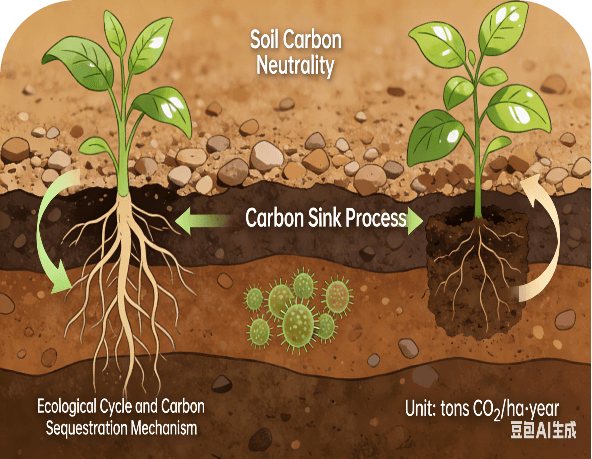
Soil and Carbon Neutrality Goals: The Critical Terrestrial Solution
Achieving global carbon neutrality—balancing anthropogenic greenhouse gas emissions with removals—is an urgent imperative to mitigate climate change. In this endeavor, soil emerges not merely as a component of the landscape but as a foundational and dynamic carbon sink with unparalleled potential. Moving beyond viewing soil as just an agricultural medium to recognizing it as active climate infrastructure is key to developing credible and effective carbon neutrality strategies.
Soil as a Carbon Reservoir and Sink
Terrestrial soils store approximately 2,500 gigatons of carbon—three times more than the atmosphere and four times more than all living biomass. This carbon exists primarily as Soil Organic Carbon (SOC), derived from decomposed plant and animal matter. The capacity of soil to sequester additional atmospheric carbon dioxide (CO₂) through photosynthesis and stable SOC formation presents a powerful natural climate solution. Enhancing this sink can directly offset emissions from hard-to-abate sectors like industry and transport.
Pathways for Enhancing Soil Carbon Sequestration
Transitioning from conventional to regenerative land management is central to unlocking soil's carbon potential. Key practices include:
- Agroecological Farming: Implementing no-till or reduced-till agriculture, planting cover crops, diversifying crop rotations, and integrating livestock through managed grazing. These practices minimize soil disturbance, maintain continuous living roots, and increase organic matter inputs, thereby enhancing SOC storage.
- Restoration of Degraded Lands: Reforesting marginal lands, restoring peatlands (which are carbon-dense ecosystems), and rehabilitating degraded grasslands can rapidly rebuild lost soil carbon stocks and restore ecological function.
- Agroforestry and Perennial Systems: Incorporating trees into agricultural landscapes and shifting towards perennial crops increases biomass and root depth, leading to greater and more stable carbon inputs into the soil profile.
Integration into Carbon Neutrality Frameworks
For soil carbon to be a credible pillar of carbon neutrality, several steps are essential:
- Measurement, Reporting, and Verification (MRV): Developing robust, cost-effective, and standardized scientific protocols to accurately measure changes in soil carbon stocks over time is non-negotiable. This ensures integrity in carbon accounting.
- Policy and Economic Incentives: Governments must integrate soil health and carbon sequestration targets into Nationally Determined Contributions (NDCs) under the Paris Agreement. Creating compliant carbon markets that financially reward farmers and land managers for verifiable SOC increases provides a critical economic driver for adoption.
- Systems Thinking: Soil carbon strategies must be pursued alongside deep emissions reductions. They should also be designed to deliver vital co-benefits—such as improved water retention, enhanced biodiversity, and increased farm resilience—ensuring they contribute to holistic environmental and social sustainability.
Conclusion
Soil is a indispensable ally in the race to net-zero emissions. By strategically managing the world's soils to enhance their natural carbon capture and storage capacity, we can turn a significant portion of our agricultural and natural lands into reliable carbon sinks. This requires a committed shift in land management, backed by strong science, innovative policy, and fair economics. Investing in soil carbon is ultimately an investment in a stable climate, food security, and ecological resilience, making it a cornerstone of any serious carbon neutrality agenda.